A short piece about film cameras and football violence in the 70s
Listening to: Dodgy - Homegrown (1994)
Picked up my old Olympus OM-10, the one I wrote about in a post a few days ago, and instinctively held it in front of me, at eye level and at arm’s length, as if the thing had a back screen. I'm so indoctrinated into using back screens that it's just become the natural thing to do.
'Twasn't always like that. I wasn't always like that. In the past (cue sad trumpet music), in the good old days before the war, etc., one had to think about exposure, shutter speed, what aperture to set, whether the ISO was correct, and, more often than not, what film was actually loaded in the camera.
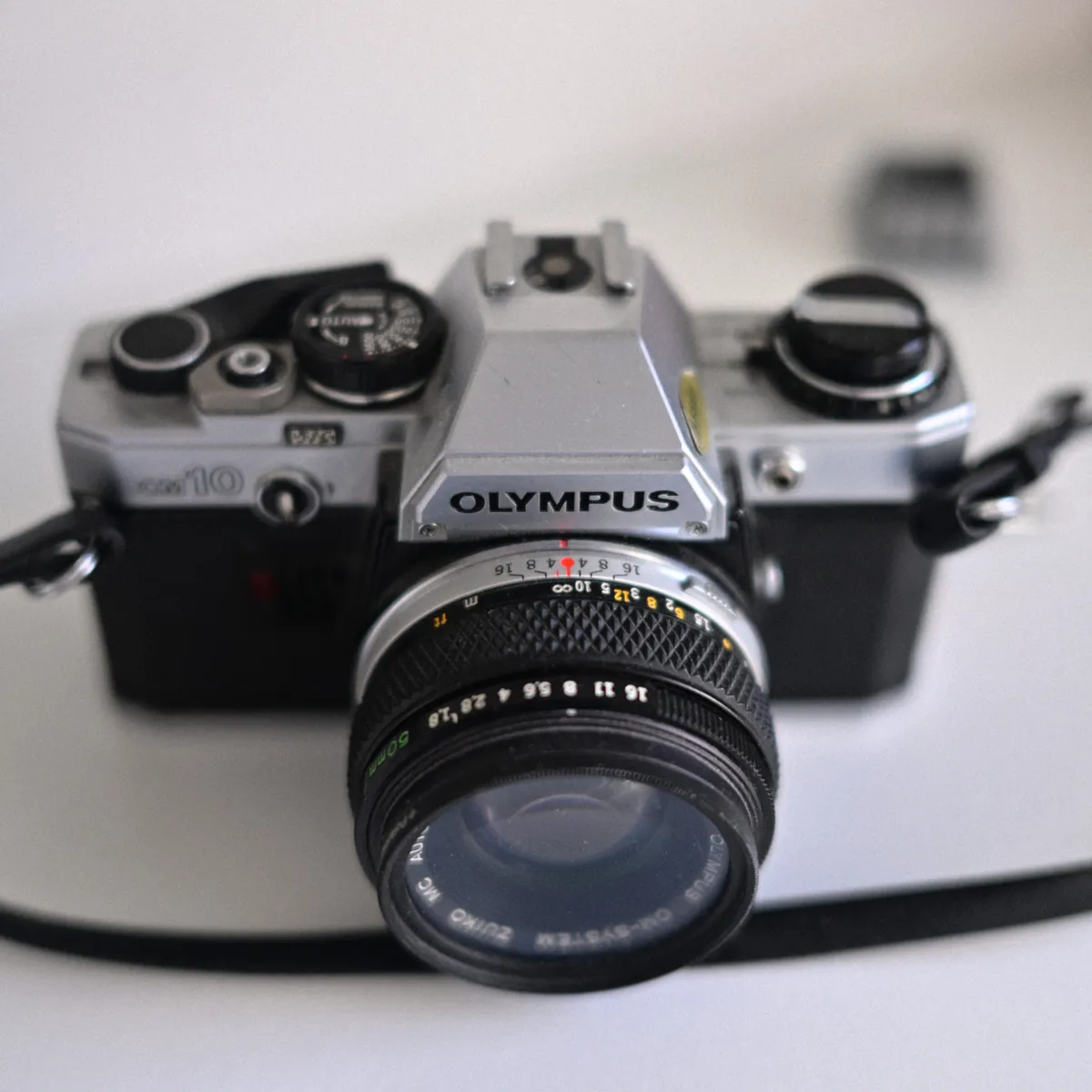
We've — and I use the royal we — gotten so lazy with photography lately. Nowadays you can spray and pray and fix it all in editing.
Photography used to be risky. A whole day out on the streets shooting with your lens cap on was a perfectly realistic outcome. A digital camera will tell you that immediately. An old Olympus won't.
And I do prefer shooting digital. I don't get the whole film aesthetic these days (see also: vinyl). Sure, it looks nice, and it's a nice experience, and yet there's always some beanie-hat-wearing twat who'll tell you it's about the process as well. Yeah, well, sod that. I've ruined enough family moments with my film camera — all out of focus and overexposed — while my great-auntie Beryl, with her SureShot from 2005, pulled off some Magnum-level stuff right beside me.
Where am I going with this?
Probably somewhere I always seem to end up. What I'm really talking about — what I'm always talking about, if I'm being honest with myself — is the loss of imperfection.
You need an example. Speaking to my son about this week's disastrous Champions League results for the UK teams had me trotting out my usual monologue about how football in the 70s and 80s was so much better — real football, real players, real competition, etc. and so on. You get the idea.
And → when you watch those games, you have to admit that there's something rawer and more honest about them than the polished, choreographed spectacle you get served nowadays. Of course, like most things in the 70s and 80s, there's plenty about football culture I don't miss — the racism, the violence, the general sense that everything might kick off at any moment.
So while I don't miss the process of actually attending an 80s football game, I do miss the end result: enjoyable, honest football, played by people who earned roughly what you did. Players you could actually relate to. Not like those prima donnas nowadays.
Actually, that's the same destination I started from — just a different route.
That grainy, slightly-too-dark photograph. That muddy pitch, that mis-controlled touch, that goalkeeper who looked like he might have had a few too many the night before. The things that reminded you that the person holding the camera, or the ball, was just a person. Like you.
Nostalgia is a funny thing. It edits out the dark room disasters, the sharpened coins thrown at you coming out of the ground — and keeps only what felt real, and maybe that's a cheat. But there's a reason the Olympus still feels right in my hands, even after all these years. Even held up at the wrong angle, looking for a screen that isn't there.
Some things just stick with you. Even when you know better.